
The Fascinating History of El Molinon Stadium in Spain
Spain is a nation with a deep footballing soul, and no venue captures its enduring spirit quite like the home of Real Sporting de Gijon. According to in-depth research by Xoilac , History of El Molinon Stadium spans over a century, making it the oldest professional football ground in the country. From its humble beginnings near an old windmill to hosting World Cup matches, this iconic arena remains a sacred temple for Spanish sports enthusiasts and a symbol of Asturian pride.
The Fascinating History of El Molinon Stadium in Spain
The Ancient Roots of the History of El Molinon Stadium
The origins of the ground are as picturesque as the city of Gijon itself. The name “El Molinon” is derived from a large watermill that once stood on the site, providing a unique landmark for the local community. While the exact date of the first match played there is debated, the first recorded mention of the ground in local newspapers dates back to 1908. This early start cements the History of El Molinon Stadium as the foundation of professional football infrastructure in Spain.
In 1917, Real Sporting de Gijon officially established the stadium as their permanent home. During these early years, the facility was modest, consisting of little more than a dirt pitch and basic wooden stands. However, the passion of the local supporters quickly transformed it into a fortress. By 1920, the ground was prestigious enough to host the final of the Copa del Rey between FC Barcelona and Athletic Bilbao, proving that it was already a centerpiece of the Spanish sporting landscape.
The Role of the History of El Molinon Stadium in 1982
A pivotal chapter in the venue’s legacy occurred when Spain was chosen to host the 1982 FIFA World Cup. To meet international standards, the stadium underwent a massive renovation, including the construction of new tiers and the installation of modern lighting systems. This era of the History of El Molinon Stadium is often remembered for hosting three matches of the tournament, including one of the most controversial games in football history.
Witnessing the Legend of Quini
No discussion of this stadium is complete without mentioning Enrique Castro, better known as “Quini.” The legendary striker is the soul of Sporting Gijon, and his exploits are etched into the History of El Molinon Stadium. Quini’s ability to find the back of the net and his humble personality made him a hero across Spain. Following his passing in 2018, the city of Gijon officially renamed the venue “Estadio El Molinón-Enrique Castro Quini” to ensure his name would forever be associated with the pitch he dominated for so many years.
Architectural Evolution and Modern Facilities
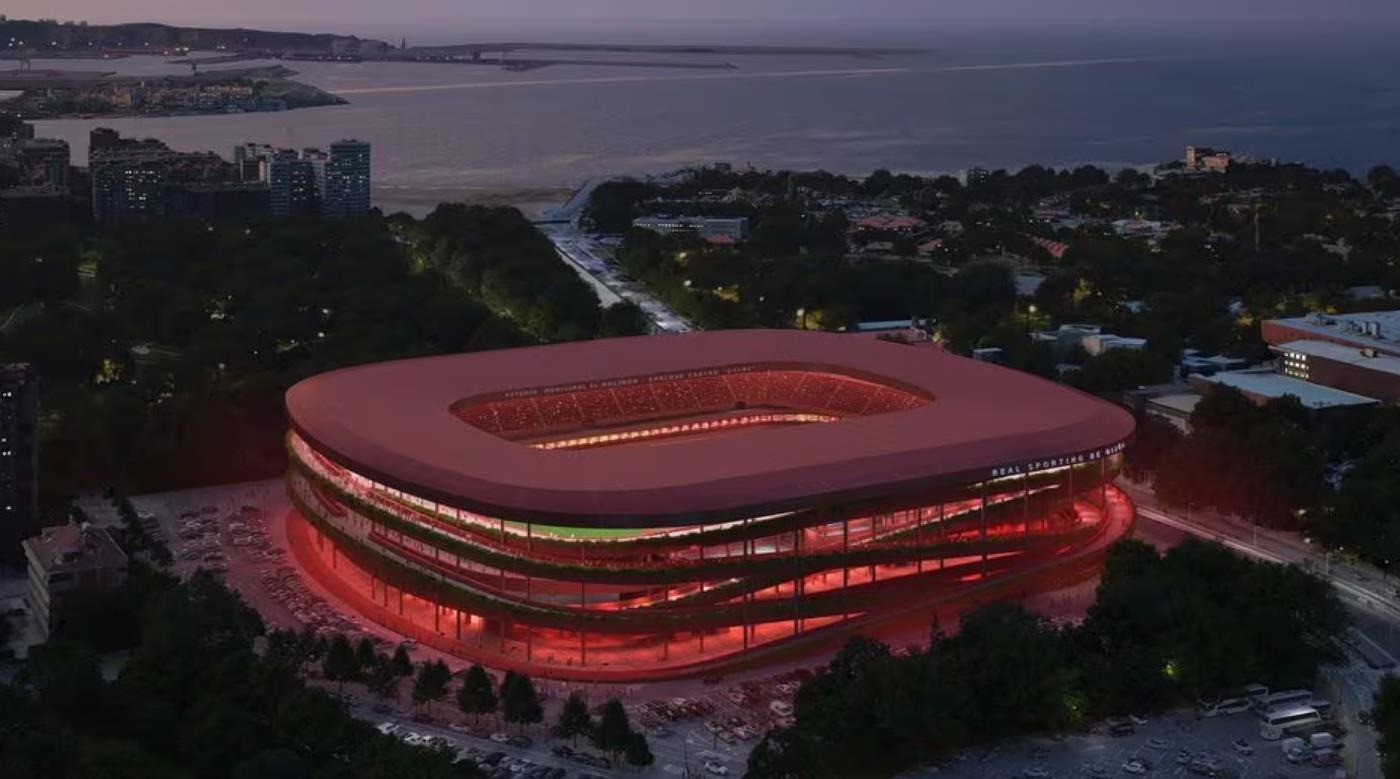
Over the decades, the stadium has transitioned from a traditional English-style ground into a modern multi-purpose facility. Significant updates between 2009 and 2011 completely transformed the exterior, adding a striking red and white facade that reflects the club’s colors. This modernization did not destroy the History of El Molinon Stadium but rather protected it, integrating commercial spaces, a club museum, and a boutique hotel into the structure. Today, it stands as a Category 3 UEFA stadium, capable of hosting high-level European competition while maintaining the intimacy that fans love.
A Cauldron of Passion and Tradition
The stadium is famous for the “Maremoto” (tidal wave) of sound produced by the Sporting faithful. Even when the club has faced challenges in the second division, the seats are often filled with loyal supporters who treat every match like a final. The History of El Molinon Stadium is not just a record of bricks and mortar; it is a tapestry of chants, tears of joy, and the shared identity of a city that lives for the weekend.
Read more on Xoilac TV https://www.barpleiades.com/lich-thi-dau/
Conclusion
In conclusion, the History of El Molinon Stadium is a remarkable narrative of survival and adaptation. It has outlasted world wars, economic shifts, and the total transformation of the footballing industry to remain a vibrant, living piece of Spanish heritage. As the oldest professional ground in Spain, it offers a deep connection to the roots of the sport that modern “bowl” stadiums simply cannot replicate. Whether you are a historian of the game or a passionate fan, a visit to this Asturian landmark is a journey through time.